

Tre Campbell: From the Playground to the Negotiating Table
The DC native, former Georgetown University point guard gets candid on his unlikely path from childhood hoops prodigy to star agent helping next-gen hoopers navigate college basketball’s NIL era.

There’s a version of the hoop story that ends the day the ball stops bouncing. Tre Campbell never lived in that version.
Before he became an agent for Prodigy Sports Group, steering young athletes through the new economy of college sports, he was a DC kid with a hometown dream: first-team all-everything coming out of WCAC powerhouse St. John’s College High School, 1000-point scorer, twenty-plus scholarship offers, and a heart set on Georgetown because Allen Iverson wore the jersey first. Tre’s path has been anything but linear: a degree from the Hilltop, a grad year at the University of South Carolina, a run overseas that COVID cut short, and a daughter on the way that quietly rerouted everything.
Through it all, Tre never left the game. In fact, he’d go on to get a front-row view from almost every seat in the building. He coached grassroots ball with the same Team Takeover program that raised him. He helped develop first-round picks at IMG: Jarace Walker, Jett Howard, Keyonte George, and Darius Acuff (who’s one of the most intriguing prospects in this year’s draft), just to name a few. He recruited, he scouted, he sat on a college staff at College of Charleston. Few people in the business of athlete representation have the hands-on experience Tre has.
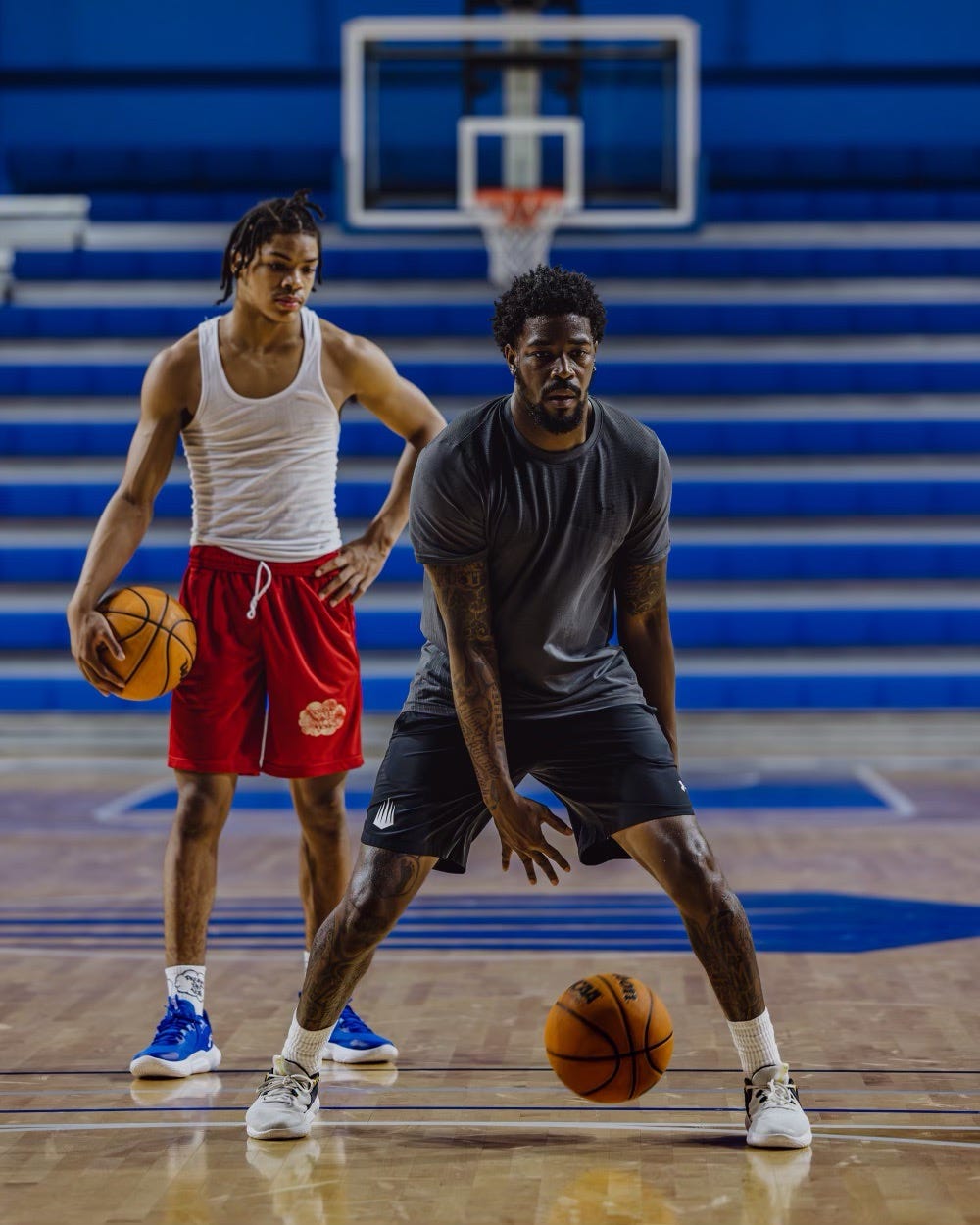
I’ve known Tre since we were five and six years old, competing against each other, back when the game was just that—a game. This is a full-circle moment, but it’s much bigger than the two of us. We get into the recruitment that started it all, the fit-over-everything gospel he now preaches to his clients, what nobody truly understands about the money moving through college sports, the squeeze NIL puts on mid-majors, and more. It really all comes down to one simple idea: the right person in your corner can change the whole trajectory of a career.
This conversation has been slightly edited for length and clarity.
“Well-Connected”
Curtis Rowser: You emerged as a standout recruit very early in your career, earning twenty-plus scholarship offers when all was said and done. Walk me through your recruitment and ultimately your decision to stay at the crib and sign with Georgetown.
Tre Campbell: I really took off after my 10th-grade year. Heading into my junior season, we got a new coach who’d coached pros at Benedictine in Richmond. He put the ball in my hands from day one and let me play the game I knew I could play. And it showed. That season I was first-team All-Met, first-team All-WCAC, first-team All-DC.
Georgetown had recruited me all year, and I committed that spring of my junior year, it was super early. A few reasons. One, it was my hometown team. Two, Allen Iverson is my favorite player. Three, I’d gotten tight with the guys on the roster; a lot of them were sophomores and juniors at the time. My high school was only 15 minutes from Georgetown, so I’d go up there like every day to play pickup and just hang out. I didn’t even take any other official visits. It felt like the perfect opportunity at the time, so I took it.
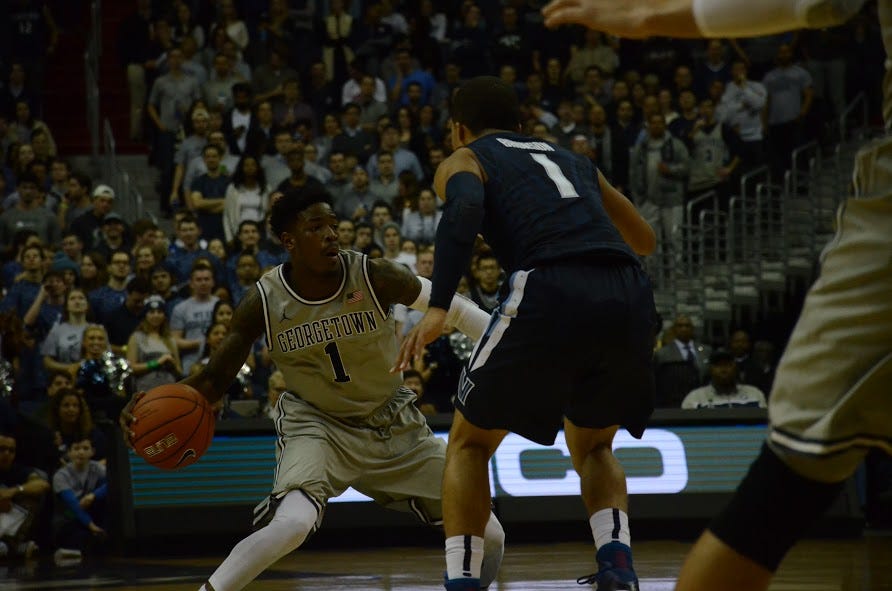
Beyond the hometown pull and the rapport you built with the guys, how much did the actual basketball fit factor into your decision? Or did that kind of fall by the wayside?
Honestly, when I picked Georgetown I wasn’t really considering the basketball fit at all. I was going off it being home, the vibe, the relationships. And I didn’t have anybody in my corner the way my clients do now—somebody who’d been through it. My dad never played college ball, I don’t have uncles who played, I’m the only one in my family who played at this level. That’s why I always said I wanted to be the person for these kids that I never had. The game needs that, the kids need that. There are a lot of people who’ll get over on a kid just to move him somewhere so they can get paid, instead of making sure the kid is straight and thinking long-term. That’s what I’m in it for. I make sure every one of my kids picks a school where it’s the right fit. Fit in basketball is everything. Look at the guys nobody thought much of in high school—they land at the right fit in college and end up in the NBA. That’s how it works. I always stress that to my guys.
Fast-forward: you graduated from Georgetown, played a grad year at South Carolina, and had a short but successful stint hooping overseas before COVID hit and shut the world down. How’d you come to decide it was time to step away from playing and pursue other lanes in the game?
I wanted to go back overseas, but then I found out I had a daughter on the way. And no offer I got stood out enough for me to accept it. So I started coaching with 16U Team Takeover—the same elite grassroots program I came through. Later that summer, as soon as Peach Jam was over, I ironically ran into my high school coach, who was now the head coach at IMG. He said, Come down here with me. I just got two spots open. I want you in, and I’ll help you with your coaching career.
Man, I took off. The first group I had was already loaded. We had Jarace Walker, who was top-five in the country; Jett Howard, who was top-50; and Jaden Bradley, who was the number-one point guard in the country at the time. Then we got a call saying we might be able to land Keyonte George, which we ultimately did. That was a strong group. Keyonte, Jett, and Jarace are all in the NBA right now, all first-round picks: two lottery, and one right outside the lottery at 16. And Jaden’s gonna get drafted this year.
It’s crazy, because these are the same kids I had to recruit to IMG as college coaches were recruiting them to their universities. Because I was a good player at a young age, I know a lot of these grassroots guys. A lot of the program directors were coaches back when I was coming up; now they run their own organizations. So I’m well-connected, and that’s how I got plugged in with so many players and coaches over the years. I’ve known some of these people since I was seven, eight, nine years old.
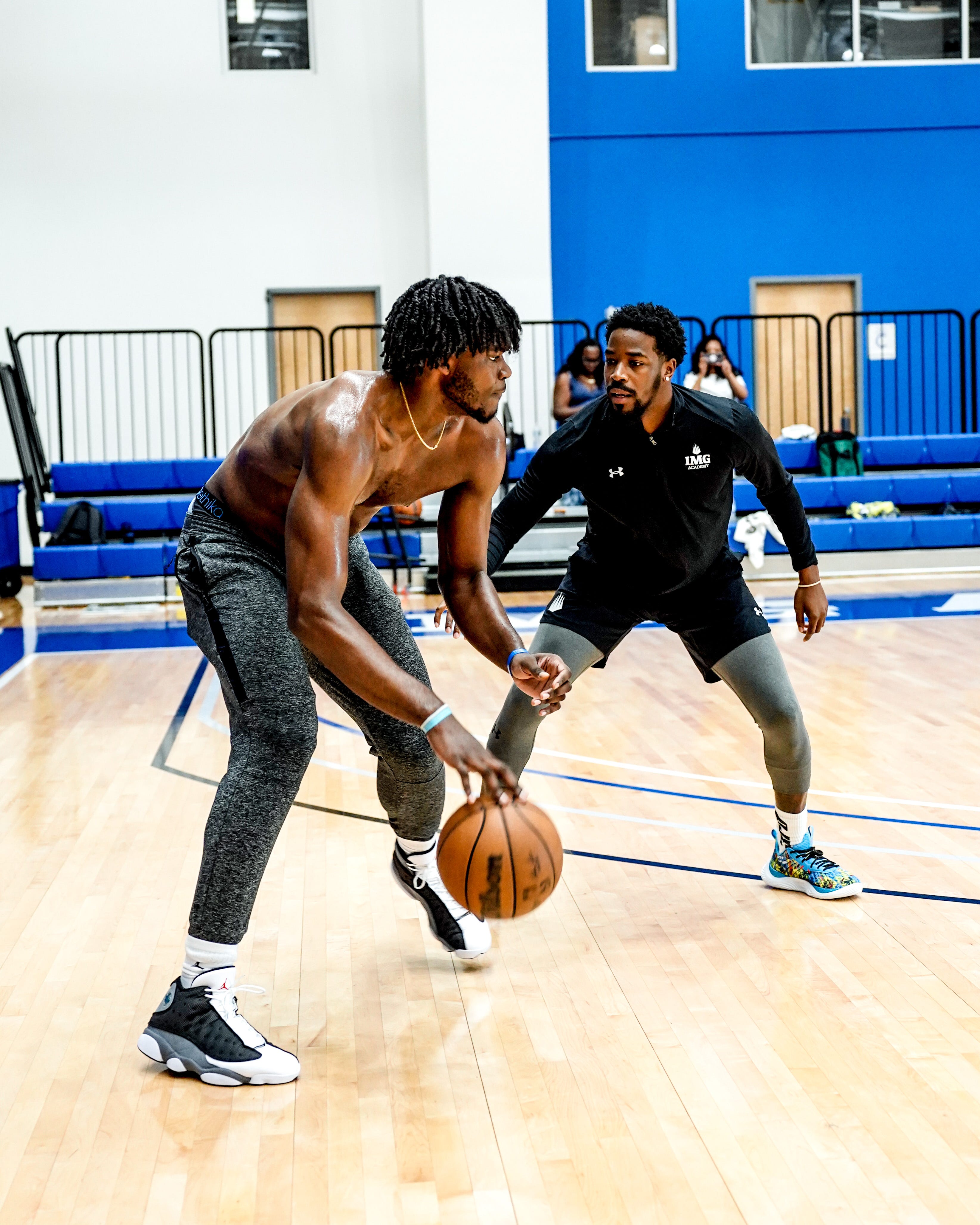
What are the characteristics you’re looking for when recruiting players in this climate?
When I’m recruiting, there are a few things I’m focused on. I’m considering the home aspect: his upbringing, his relationship with his parents, etc. Then his personality: is the kid personable, can he actually hold a conversation? What’s his character like off the court? And, of course, I’m looking at the talent. All of that matters. It’s one thing to have a really good player, but if he’s not good off the court, I’m not trying to deal with that—that’s like babysitting. I think I have an advantage when it comes to prospect evaluation, because of my experiences being recruited as a prospect coming up.
“NIL Changes by the Day”
The business is way different than when you were coming up. Specifically, NIL flipped the entire power structure of college basketball. From where you sit today, what’s the thing most people still don’t understand about how this era actually works?
People still don’t grasp how much money is really in college sports, especially at the Power Five level. There’s so much of it. Part of our job as agents is knowing how to maneuver through that so we can help our clients maximize their value. People also don’t understand half the rules that have been put in place these last few years. That’s where my agency excels—we’ve got someone in direct communication with the NCAA, working hand-in-hand with them, so we know the rules and stay on the right side of them. NIL changes by the day. We have to stay on top of it to help our clients hit their potential in every aspect of their careers.
The NIL era and the transfer portal have created a real tension for mid-major programs. They can essentially develop a player into something special, only to watch a Power Five school write a bigger check and take him. Where do you stand on this?
As an agent, I really like working with great players who start at low- and mid-major programs. These are the sleepers who end up getting offered crazy bags by high-majors in due time. A player could average 12 points a game on a good mid-major program and end up making great money the following year at a high-major program. It’s a harsh reality for mid-majors: if you have a player who’s getting lured away by a bigger program, it’s going to be hard to keep him if you don’t have the money. Nowadays, mid-majors seem to have two years, max, with a freshman who goes on to earn Freshman of the Year and first-team all-conference honors. That said, some mid-majors can compete. Some of these mid-major programs have just as many resources as Power Five schools.
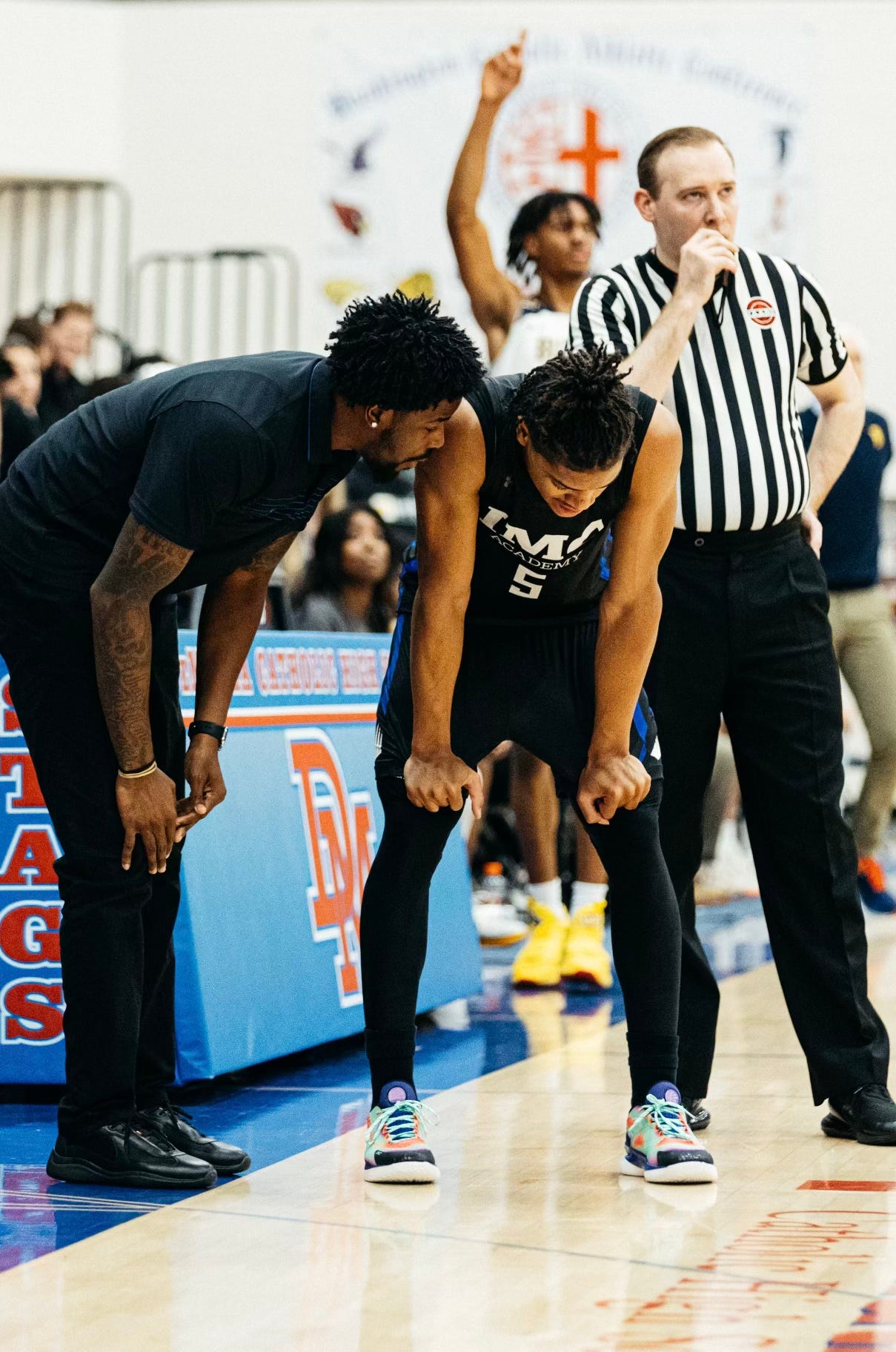
What’s the conversation you wish somebody had with you when you were 18 and being recruited everywhere?
I wish someone would have really just told me to take my time. This goes back to what I said earlier: It’s about fit more than anything else. It doesn’t matter what level it is—as long as your game fits the coaching staff’s style of play, you’re going to make noise. I wish I had someone in my corner who could break that down to me the same way I’m doing with my guys.
Ten years from now, what does success look like for Tre Campbell—not on paper, but in terms of the actual impact you made on the players you worked with?
Success to me looks like seeing every one of the guys I have right now become professional hoopers, whether that’s the NBA or overseas. But before we get to the pros, I just want to put them in good situations in college. Of course, the more success my guys have, that’s only going to help me continue getting players—but more than anything, I want my guys to love me because I was honest with them, and helped them pick the right situation.
Great seeing you both excelling.